Wednesday, March 11, 2020

What does a host server do?

In computer networking, a hostname (archaically nodename) is a label that is assigned to a device connected to a computer network and that is used to identify the device in various forms of electronic communication, such as the World Wide Web. Hostnames may be simple names consisting of a single word or phrase, or they may be structured.
Internet hostnames may have appended the name of a Domain Name System (DNS) domain, separated from the host-specific label by a period ("dot"). In the latter form, a hostname is also called a domain name. If the domain name is completely specified, including a top-level domain of the Internet, then the hostname is said to be a fully qualified domain name (FQDN). Hostnames that include DNS domains are often stored in the Domain Name System together with the IP addresses of the host they represent for the purpose of mapping the hostname to an address, or the reverse process.
saturn and jupiter may be the hostnames of two devices connected to a network named example. Within example, the devices are addressed by their hostnames. The domain names of the devices are saturn.example and jupiter.example, respectively. If example is registered as a second-level domain name in the Internet, e.g., as example.net, the hosts may be addressed by the fully qualified domain names saturn.example.net and jupiter.example.net.
In the Internet, a hostname is a domain name assigned to a host computer. This is usually a combination of the host's local name with its parent domain's name. For example, en.wikipedia.org consists of a local hostname (en) and the domain name wikipedia.org. This kind of hostname is translated into an IP address via the local hosts file, or the Domain Name System (DNS) resolver. It is possible for a single host computer to have several hostnames; but generally the operating system of the host prefers to have one hostname that the host uses for itself.
Any domain name can also be a hostname, as long as the restrictions mentioned below are followed. So, for example, both en.wikipedia.org and wikipedia.org are hostnames because they both have IP addresses assigned to them. A hostname may be a domain name, if it is properly organized into the domain name system. A domain name may be a hostname if it has been assigned to an Internet host and associated with the host's IP address.

Tuesday, March 10, 2020

What are the 4 types of network?

A computer network is a group of computers linked to each other that enables the computer to communicate with another computer and share their resources, data, and applications.
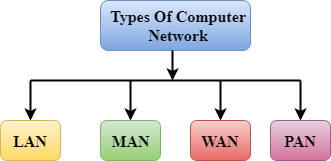
A computer network can be categorized by their size. A computer network is mainly of four types:
Computer Network Types


LAN(Local Area Network)

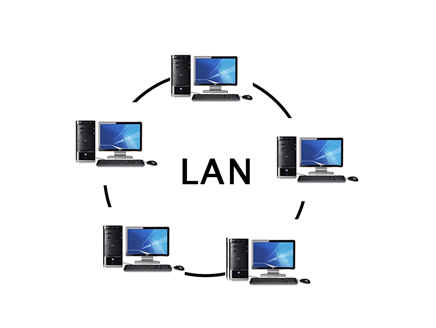
  • Local Area Network is a group of computers connected to each other in a small area such as building, office.
  • LAN is used for connecting two or more personal computers through a communication medium such as twisted pair, coaxial cable, etc.
  • It is less costly as it is built with inexpensive hardware such as hubs, network adapters, and ethernet cables.
  • The data is transferred at an extremely faster rate in Local Area Network.
  • Local Area Network provides higher security.
Computer Network Types

Friday, March 6, 2020

Dedicated Server Hosting | 24/7 Managed Support

Managed Dedicated server is an optimal alternative for organizations with resource-intensive applications, sensitive data, and high-traffic online presence requirements. We provide client complete control over the subscribed dedicated server, including all the resources and underlying hardware.

Go4hosting offers flexible, resilient Managed dedicated server to meet unique specifications of organizations spanning across diverse verticals. Regardless of the configurations you currently employ, our experts can customize a solution that swiftly aligns with your business processes and policies. Our dedicated hosting service help enterprises eliminate the unwanted intricacies and expenses that comes with procuring IT components and managing staff. Our experts manage everything so that you can better concentrate on new market opportunities and grow.

Our managed dedicated servers includes software configuration, operating system installation, application maintenance, management, monitoring, and problem-resolution support on a 24*7 basis.

Fully-managed dedicated servers

Besides, enabling businesses to select their preferred hardware and operating system, we perform server tuning, server version upgrades, migrations, OS upgradations, application management, and seamless monitoring.

Technical Support

We provide prompt and efficient technical support round the clock. Clients can connect with our experts when and where required over the call, email, or by having live chat.

State-of-the-art Data Centers

Our tier III data centers are armed with resilient network, storage and other IT components that can be scaled as per the business needs. In addition to this, we ensure high-speed network connectivity for seamless business functionality.

Unparalleled Security

We not only manage and maintain your server for optimal performance, but also keep it secure from vulnerabilities. We maintain high standards and technologies to keep up with your security and compliance demands.

Thursday, March 5, 2020

What are different types of servers?

Different servers do different jobs, from serving email and video to protecting internal networks and hosting Web sites. Learn about the many types of servers used today.

Servers are often dedicated, meaning that they perform no other tasks besides their server tasks.  Different servers do different jobs, from serving email and video to protecting internal networks and hosting Web sites.

Server Types

This list categorizes the many different types of servers used in the marketplace today. 

Proxy Server

A proxy server sits between a client program (typically a Web browser) and an external server (typically another server on the Web) to filter requests, improve performance, and share connections.

Mail Server

Almost as ubiquitous and crucial as Web servers, mail servers move and store mail over corporate networks (via LANs and WANs) and across the Internet.

Server Platforms

A term often used synonymously with operating system, a platform is the underlying hardware or software for a system and is thus the engine that drives the server.

Web Server

At its core, a Web server serves static content to a Web browser by loading a file from a disk and serving it across the network to a user's Web browser. This entire exchange is mediated by the browser and server talking to each other using HTTP.

Application Server

Sometimes referred to as a type of middleware, application servers occupy a large chunk of computing territory between database servers and the end user, and they often connect the two.

Real-Time Communication Server

Real-time communication servers, formerly known as chat servers or IRC Servers, and still sometimes referred to as instant messaging (IM) servers, enable large numbers users to exchange information near instantaneously.

FTP Server

One of the oldest of the Internet services, File Transfer Protocol makes it possible to move one or more files securely between computers while providing file security and organization as well as transfer control.

Collaboration Server

In many ways, collaboration software, once called 'groupware,' demonstrates the original power of the Web. Collaboration software designed to enable users to collaborate, regardless of location, via the Internet or a corporate intranet and to work together in a virtual atmosphere.

List Server

List servers offer a way to better manage mailing lists, whether they be interactive discussions open to the public or one-way lists that deliver announcements, newsletters or advertising.

Telnet Server

A Telnet server enables users to log on to a host computer and perform tasks as if they're working on the remote computer itself. 

Open Source Server

From your underlying open source server operating system to the server software that help you get your job done, open source software is a critical part of many IT infrastructures.

Virtual Server

In 2009, the number of virtual servers deployed exceeded the number of physical servers. Today, server virtualization has become near ubiquitous in the data center.

Wednesday, March 4, 2020

Managed Dedicated Hosting Definition

Managed Dedicated Hosting Definition

A managed server is your own dedicated hosting service that also provides data storage services. In addition, managed servers have their own maintenance and backup systems. ... The one big advantage of managed servers is that they relieve the clients of having to maintain the servers themselves.

What is Managed Hosting?

Those in the digital space are familiar with Managed Hosting in one way or another.
This is a business model where a service provider leases hardware to a single customer. The service provider also provides management of the servers, software, and networks necessary for hosting for the customer.
If an issue arises, a managed hosting provider is there to help pinpoint the problem and rectify it.

What is Fully Managed Dedicated Server Hosting?

Fully Managed Dedicated Server Hosting is an isolated hosting environment where the provider handles the setup, administration, management, and support of the server or platform application. The resources are specific to the user ensuring that your data alone is hosted in your environment without being affected by the issues that arise from sharing resources.

Shared Hosting

Shared hosting is the most popular example of multi-tenancy. This is where many sites or applications exist on the same server. Quite often, shared hosting divides the server resources among customers. This would include storage and bandwidth and in some cases RAM and CPU cores.
Think of shared hosting as a home with renters all sharing the same living space.

Tuesday, March 3, 2020

What is Fully Managed Dedicated Hosting?

Managed Dedicated server is an optimal alternative for organizations with resource-intensive applications, sensitive data, and high-traffic online presence requirements. We provide client complete control over the subscribed dedicated server, including all the resources and underlying hardware.

Go4hosting offers flexible, resilient Managed dedicated server to meet unique specifications of organizations spanning across diverse verticals. Regardless of the configurations you currently employ, our experts can customize a solution that swiftly aligns with your business processes and policies. Our dedicated hosting service help enterprises eliminate the unwanted intricacies and expenses that comes with procuring IT components and managing staff. Our experts manage everything so that you can better concentrate on new market opportunities and grow.

Our managed dedicated servers includes software configuration, operating system installation, application maintenance, management, monitoring, and problem-resolution support on a 24*7 basis.
  • Redundant and high speed network connectivity
  • 24 hour server monitoring & transparency
  • Comprehensive RDP/SSH access
  • High-end disaster recovery & security modules
  • Guaranteed uptime & high-performance standards
  • Standalone, Tier III data center facilities
  • Best-in-class storage technology & management
  • Server updates, patches and management
  • Daily backups & effective disaster recovery planning
  • State-of-the-art firewall protection & blocking capabilities
  • Premium 24*7 dedicated technical support

Monday, March 2, 2020

Dedicated managed server

A dedicated hosting service, dedicated server, or managed hosting service is a type of Internet hosting in which the client leases an entire server not shared with anyone else. This is more flexible than shared hosting, as organizations have full control over the server(s), including choice of operating system, hardware, etc. There is also another level of dedicated or managed hosting commonly referred to as complex managed hosting. Complex Managed Hosting applies to both physical dedicated servers, Hybrid server and virtual servers, with many companies choosing a hybrid (combination of physical and virtual) hosting solution. There are many similarities between standard and complex managed hosting but the key difference is the level of administrative and engineering support that the customer pays for – owing to both the increased size and complexity of the infrastructure deployment. The provider steps in to take over most of the management, including security, memory, storage and IT support. The service is primarily proactive in nature. Server administration can usually be provided by the hosting company as an add-on service. In some cases a dedicated server can offer less overhead and a larger return on investment. Dedicated servers are hosted in data centers, often providing redundant power sources and HVAC systems. In contrast to colocation, the server hardware is owned by the provider and in some cases they will provide support for operating systems or applications
Using a dedicated hosting service offers the benefits of high performance, security, email stability, and control. Due to the relatively high price of dedicated hosting, it is mostly used by websites that receive a large volume of traffic.

Operating system support

Availability, price and employee familiarity often determines which operating systems are offered on dedicated servers. Variations of Linux and Unix (open source operating systems) are often included at no charge to the customer. Commercial operating systems include Microsoft Windows Server, provided through a special program called Microsoft SPLA. Red Hat Enterprise is a commercial version of Linux offered to hosting providers on a monthly fee basis. The monthly fee provides OS updates through the Red Hat Network using an application called Yum. Other operating systems are available from the open source community at no charge. These include CentOS, Fedora Core, Debian, and many other Linux distributions or BSD systems FreeBSD, NetBSD, OpenBSD.
Support for any of these operating systems typically depends on the level of management offered with a particular dedicated server plan. Operating system support may include updates to the core system in order to acquire the latest security fixes, patches, and system-wide vulnerability resolutions. Updates to core operating systems include kernel upgrades, service packs, application updates, and security patches that keep the server secure and safe. Operating system updates and support relieves the burden of server management from the dedicated server owner.

About the CompTIA A+ certification

 comptia a plus About the CompTIA A+ certification A+ (A Plus) is an entry-level computer certification for PC computer service technicians....